Bitcoin Treasury Strategy in Asia: Why It Is Different
Bitcoin Treasury Strategy in Asia: Why It Is Different
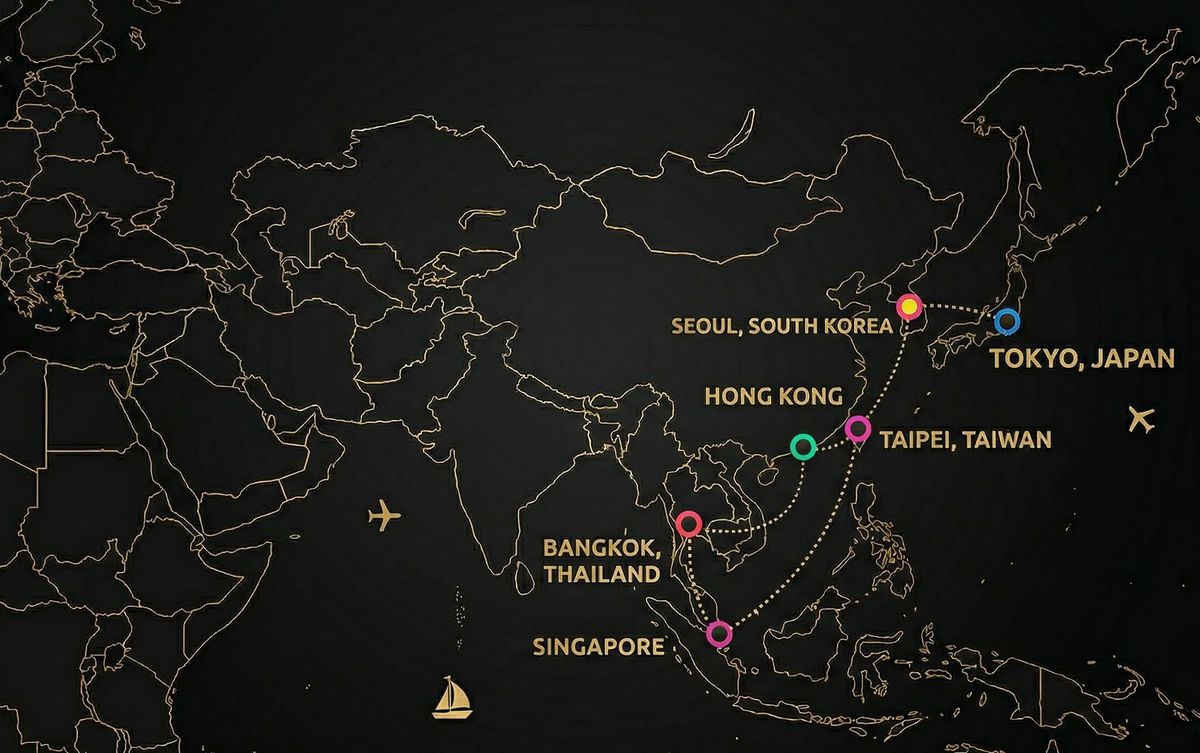
The Bitcoin treasury company model originated in the United States. Strategy’s decision to allocate its corporate cash to Bitcoin in 2020 became the template that others followed. But as the model has spread to Asia, it has adapted in ways that reflect fundamentally different market structures, regulatory environments, investor bases, and currency dynamics.
Understanding why Bitcoin treasury strategy looks different in Asia is important for anyone investing in, operating alongside, or building the infrastructure for this market.
Different Capital Markets, Different Structures
Strategy operates on NASDAQ. Its equity and debt instruments reach deep, liquid US capital markets with institutional investors who understand the Bitcoin treasury thesis and are comfortable sizing positions in it. That market depth allows Strategy to raise large amounts of capital quickly through convertible notes and equity offerings.
Asian capital markets are structured differently. The Tokyo Stock Exchange, the Hong Kong Stock Exchange, KOSDAQ in South Korea, and the Taiwan Stock Exchange each have their own investor bases, liquidity profiles, disclosure requirements, and institutional norms. A company executing a Bitcoin treasury strategy on the TSE is operating in a market where institutional comfort with digital assets is still developing, where foreign investors represent a different mix than in the US, and where the regulatory framework for digital asset disclosures may be less established.
This means that execution matters differently. A Bitcoin treasury company in Asia cannot simply replicate Strategy’s capital markets playbook. It needs to build institutional credibility within its local market, communicate the thesis in ways that resonate with local investors, and navigate disclosure and governance requirements specific to its exchange.
Currency Dynamics Create a Different Thesis
For a US company, holding Bitcoin represents an alternative to holding US dollars. The investment thesis is primarily about Bitcoin appreciation relative to a stable reserve currency.
For an Asian company, the thesis is often layered. A Japanese company holding yen-denominated cash is dealing with a currency that has depreciated significantly against the dollar over the past decade. Bitcoin’s performance relative to the yen is part of the case for holding it. The same logic applies, in varying degrees, to Korean won, Thai baht, Vietnamese dong, and New Taiwan dollar.
This currency context is not just a financial footnote. It is a meaningful part of why Bitcoin treasury strategy resonates with certain Asian boards and management teams. The combination of local currency depreciation risk and traditional savings rates that offer limited real return creates a structural case for holding a globally liquid, fixed-supply asset that many Asian companies have begun to recognize.
Regulatory Frameworks Vary Significantly
The United States now has the GENIUS Act establishing a federal framework for digital assets. The SEC/CFTC joint taxonomy clarifies what is and is not a security. For all its complexity, the US regulatory environment is increasingly coherent.
Asia is more fragmented. Each major market has its own approach.
Japan has been relatively progressive, with the Financial Services Agency establishing frameworks for virtual asset service providers and digital asset holdings. Japanese public companies holding Bitcoin have navigated accounting treatment and disclosure requirements within an established but still evolving framework.
Hong Kong has established a virtual asset service provider licensing regime and is building out its stablecoin licensing framework, though the first stablecoin licenses have been delayed. For companies listed on the Hong Kong Stock Exchange, digital asset holdings require specific disclosure treatments and may need to be evaluated against exchange listing rules.
South Korea has a developed domestic crypto market but corporate Bitcoin treasury adoption has been slower, in part because of tighter exchange regulations and more conservative institutional culture around corporate digital asset holdings.
Thailand, Vietnam, and Taiwan are at earlier stages of regulatory development for digital assets at the corporate level, which creates both opportunity and uncertainty for companies exploring Bitcoin treasury strategies in those markets.
This regulatory fragmentation means that executing a Bitcoin treasury strategy in Asia is not a single playbook. It requires jurisdiction-specific legal analysis, exchange-specific disclosure planning, and governance frameworks that account for local regulatory expectations.
Operational Involvement as a Differentiator
In the US market, the dominant model for Bitcoin treasury companies has been financial: a company allocates capital to Bitcoin through its treasury function, and the operating business continues largely unchanged. The Bitcoin holding is additive to the existing business rather than transformative of it.
In Asia, the model has often been more operationally intensive. Companies adopting Bitcoin treasury strategies in Asian markets frequently need deeper support: help navigating local regulatory requirements, building the custody and compliance infrastructure, communicating to local investor bases who may be less familiar with the thesis, and structuring the capital allocation in ways that work within local accounting and disclosure frameworks.
This is where operators with regional expertise, regulatory relationships, and institutional credibility play a different role than they would in a US context. The operational layer matters more in markets where the infrastructure is still being built.
The Public Company Structure as an Asset
One of the distinctive features of Asian Bitcoin treasury strategy is the deliberate use of existing public company structures. Many of the companies adopting Bitcoin treasury strategies in Asia are not new entities created specifically for this purpose. They are existing publicly listed companies, in industries ranging from telecom to manufacturing to financial services, that are reorienting their capital allocation strategy around Bitcoin.
This is different from the US model in an important way. In the US, the dominant Bitcoin treasury company is Strategy, which was already a software company before its Bitcoin pivot. But the broader US market has also seen new entities created specifically as Bitcoin holding vehicles.
In Asia, the model is almost entirely built on existing public company structures. This has regulatory advantages: the company already has a listing, an investor base, and established disclosure mechanisms. It also has strategic advantages: the existing operating business provides revenue, brand recognition, and institutional relationships that a new entity would take years to build.
The challenge is that existing public companies often carry legacy business concerns, governance complexity, and investor expectations that need to be managed through the transition to a Bitcoin-centric capital allocation strategy. This is a management and communication challenge as much as a financial one.
What Investors Should Understand
Investors evaluating Asian Bitcoin treasury companies should apply a framework that accounts for these differences rather than importing the US valuation model directly.
The mNAV multiple still applies as a primary valuation framework. But the appropriate premium or discount relative to the US market should reflect the liquidity of the local exchange, the quality of the operating business, the governance and custody standards of the specific company, the regulatory environment in that jurisdiction, and the institutional sophistication of the local investor base.
A company trading at a lower mNAV than Strategy may reflect genuine discount factors specific to its market. It may also reflect an opportunity: institutional investors who understand the Bitcoin treasury thesis and can tolerate local market risk may be acquiring Bitcoin exposure at a discount to what the same exposure would cost in US markets.
The Sora Ventures Perspective
Sora Ventures was among the earliest institutional investors to identify and act on the Bitcoin treasury opportunity in Asian public markets. Our portfolio includes Bitcoin treasury companies listed in Japan, Hong Kong, South Korea, Thailand, Vietnam, and Taiwan.
Our operational involvement in these companies goes beyond passive investment. We work directly with management teams on capital markets strategy, governance frameworks, investor communication, and the operational infrastructure required to hold and manage Bitcoin at institutional standards in each jurisdiction.
The model is not a copy of the US playbook applied to Asia. It is a distinct approach that accounts for the specific dynamics of each market: currency context, regulatory environment, investor base, and operational requirements. That is why it requires operators who understand both Bitcoin treasury strategy and Asian capital markets, not just one or the other.
___
Sora Ventures is a global digital asset investment firm that strategically invests in and operates publicly traded companies, primarily across Asia, while investing globally in Bitcoin infrastructure, venture, and financial platforms.

Mitty Chang is Chief Growth Officer and Operating Partner at Sora Ventures. He leads marketing, web engineering, and corporate strategy for the firm's publicly traded portfolio companies across Asia. Previously, he served as Senior Director of Web and Digital at Strategy (NASDAQ: MSTR) and has held fractional CMO and CTO roles across enterprise software, fintech, and digital media.